
By Luke Patterson
Growing up, the only Filipinos I knew were related to me. Or at least, that’s what I thought.
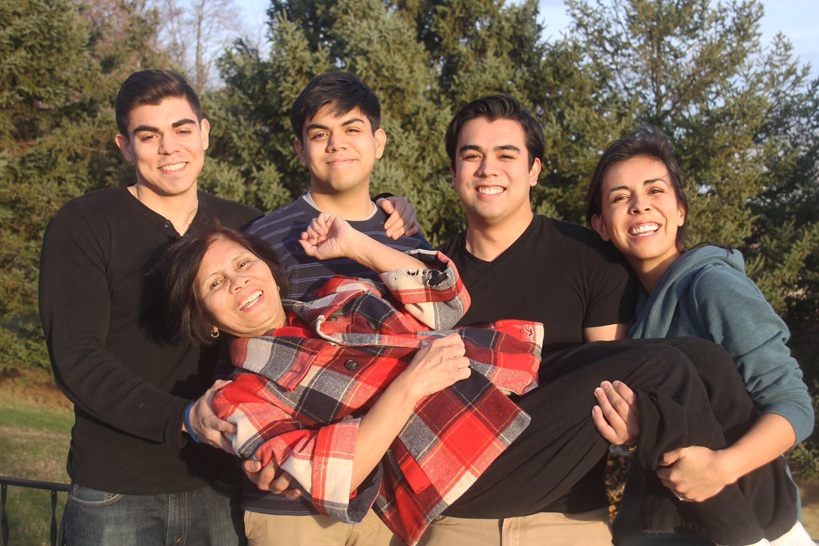
My mother, Amelia Generalla Patterson, is Filipino. She came to the United States when she was 30 and met my father while he was attending college in Colorado. My dad is American, raised in a small town in Indiana. Today, my parents live in Indiana, near my older sister and her family. I live in Cleveland, Ohio.
I am the youngest of four children, and none of us grew up learning Tagalog. My sister is the only one among us who has visited the Philippines. My mother has many siblings, some living in the United States and others back home, so I grew up with cousins who speak Tagalog fluently. I could recognize the language when I heard it, but speaking it was another matter.
For much of my life, I had grown up hearing Tagalog around my family, but I never learned to speak it myself. It was a familiar sound, even if I couldn’t participate in the conversations.
Years later, when I began studying Tagalog at 29, that familiarity followed me somewhere I hadn’t expected: into the voices of people I had never met. I would watch videos to practice listening, and the people speaking on the screen would sound like family to me.
There is something nostalgic about the sound of Tagalog itself. Hearing it stirs an emotion that is difficult to explain. A stranger speaking in a video can bring me back to the feeling of being around the people I grew up with. The more intentionally I listened to the language, the more I recognized that feeling beyond my own family.
I have studied other languages before. I took Latin in high school and Spanish in college. After college, I studied Japanese to prepare for a trip. But none of those experiences felt quite like learning Tagalog. With Tagalog, the sounds were already familiar. The language had a place in my life long before I began studying it.
I wanted to learn because I hoped to speak with my mom and feel closer to my family. But as I continued studying, I began to understand my mother in ways I hadn’t anticipated.
Learning Tagalog has helped me make sense of some of her habits when speaking English: the way she phrases certain things, the ideas that can be difficult to explain, and the occasional mix-up of pronouns. I am learning more about the language she moves between, and that knowledge gives me a new perspective on the English I have heard from her all my life.
It has also given me a deeper appreciation for her fluency in two languages. When you struggle to learn another language yourself, you begin to recognize just how much skill it takes to communicate across languages and cultures. I think more about what my mom does when she speaks with different people, switching between ways of expressing herself that I am only beginning to understand.
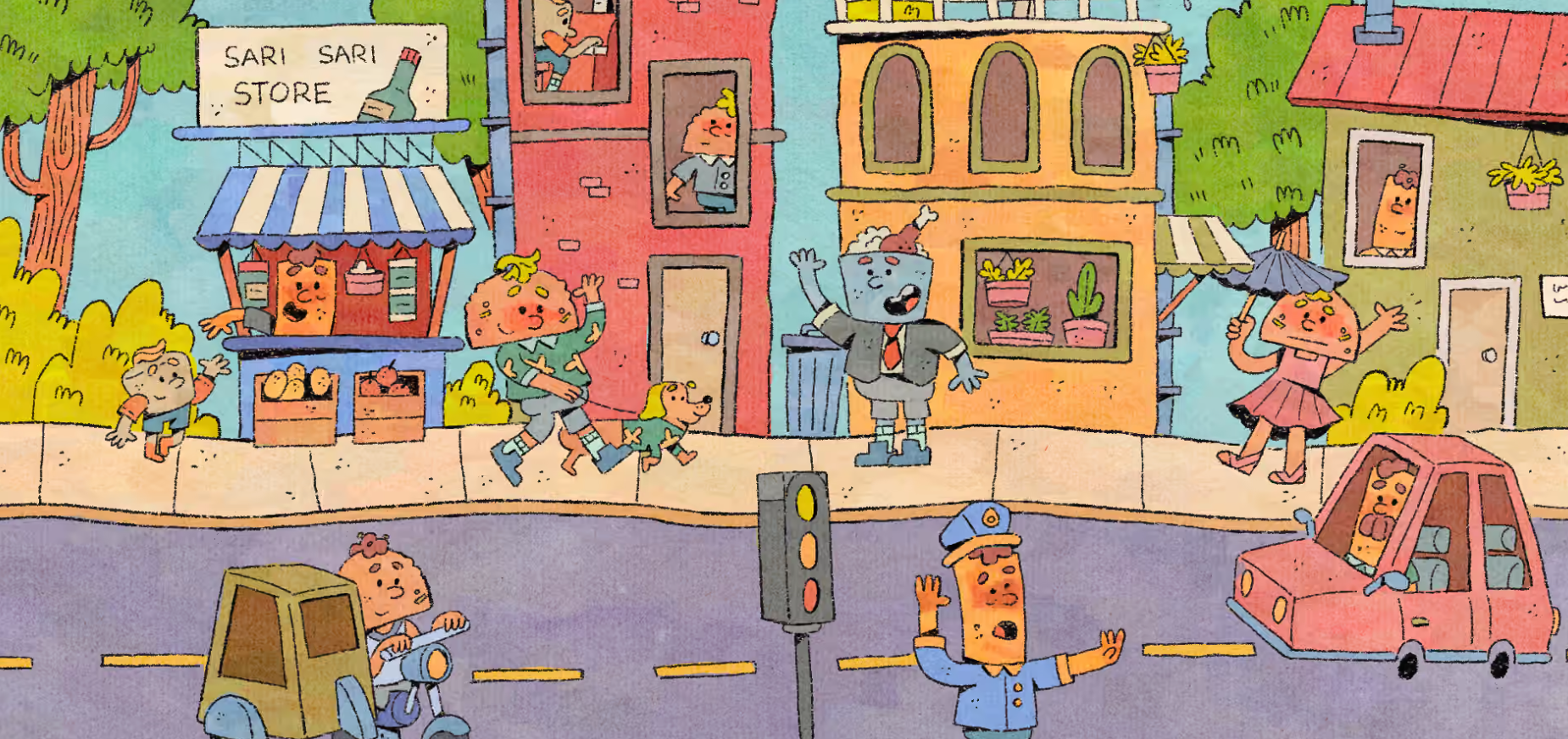
The process of learning the language has already changed the way I listen to my mother.
It has also changed what I choose to explore.
Studying Tagalog has led me toward more Filipino music, food, history and culture. I have become more intentional about exposing myself to things I want to understand better. Language gives me a starting point, and following that interest continually leads me to something new.
Growing up, I was one of the only biracial kids I knew, and I often felt different. As I have gotten older, I have come to see exploring this part of myself as an important part of growing up. It is a conscious choice to learn about a heritage that has always been mine, even if I did not fully understand it when I was younger.
That personal journey eventually led me to build Tahanan, a Filipino language-learning app, with plans to add more Philippine languages. The project grew out of something I was trying to accomplish in my own life: to feel closer to my family and to a part of myself I wanted to know better.
Through Tahanan, I have also had the opportunity to work with Filipinos who share my belief that language can help people reconnect with their roots. For some, learning a Philippine language may be a way to communicate with parents or grandparents. For others, it may be a way to explore an identity they have struggled to understand.
My own experience has shaped what I hope the app can offer. I know that meaningful things can happen even while someone is still learning. A lesson can lead to a new appreciation for a parent, spark an interest in Philippine history, or create a moment of recognition when you hear someone speak.
My family continues to be part of that journey. One of my brothers has been using my app to learn Tagalog, too. Until a couple of months ago, when he moved to Denver for a new job, he lived with my mom and practiced with her nearly every day. Having a family member learn the language alongside me is a reminder that reconnecting with our heritage does not have to be a solitary experience.
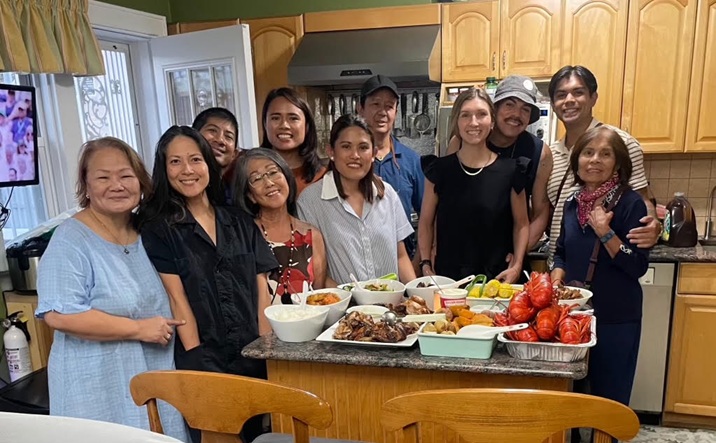
I also have family in New York, including another brother. Last month, my mom and I visited him so we could take her to her first Broadway show. We also met relatives who were visiting from the Philippines. Moments like these remind me how family connects us across generations and distances, even when we do not all share the same language skills.
I have yet to visit the Philippines. But I no longer see those things as shortcomings. They are places to begin. And when I hear Tagalog now, even from someone I have never met, they still sound like family.
Luke Patterson, a software engineer, is the creator of Tahanan, a Filipino language-learning app inspired by his journey to reconnect with his Filipino heritage. Learn more at tahanan.com.