By Joel David
To hear the cacophony of responses to Lawrence Fajardo’s Beast (written by Jim Flores) currently screening in Manila as part of the ongoing Puregold CinePanalo Film Festival, would be tantamount to missing out on its laudable achievements. Directed by Lawrence Fajardo
One might even be inclined to agree with its most extreme appreciators’ declaration that it’s the director’s best work – fulsome praise enough, considering Fajardo’s stature as one of the best Filipino filmmakers in the current millennium.
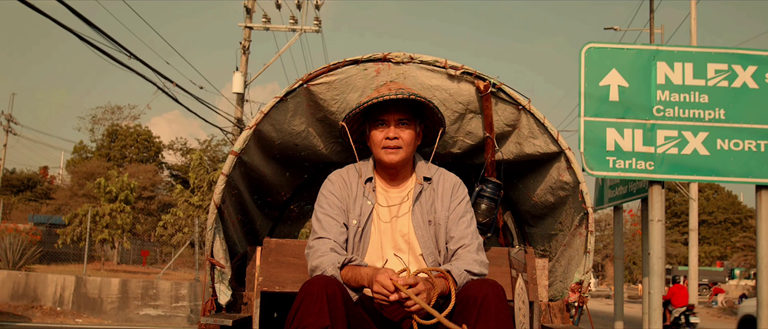
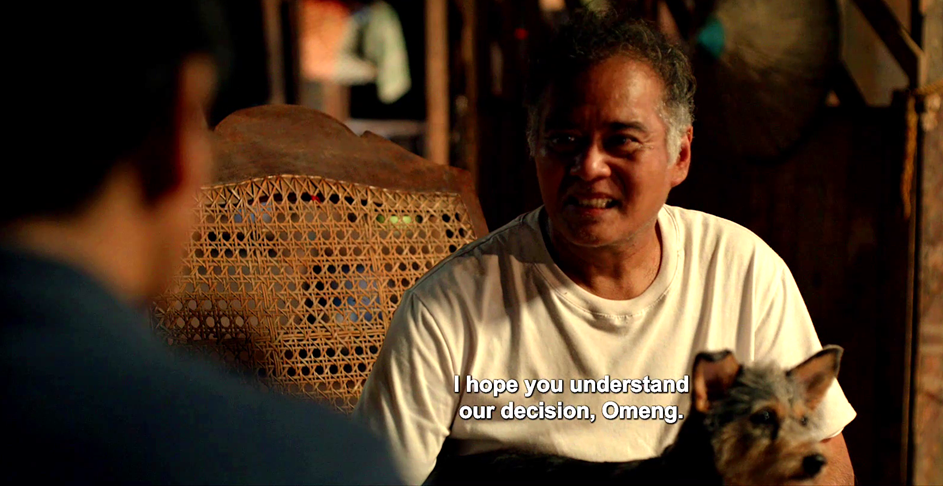
The film concerns the travails of an ordinary farmer, Mang Omeng, who’s determined to spend the rest of his life maintaining his subsistence existence as tenant on property which urban development is slowly but surely creeping up. He narrates tales to an imaginative kid, virtually a surrogate son, who prefers to hang around the farm and whatever he hears and sees when it strikes his fancy. Although Omeng refuses to sell his land, the owner brings a lawyer to inform him that his wishes have been overridden. As part of his acceptance of defeat, he decides to sell Bob, his beloved water buffalo; but upon learning that the buyer plans to slaughter the animal, he decides to harness the beast and set out to Manila to find a niece whom he hadn’t heard from in years.
What makes the entry singularly remarkable is its left-field status in the director’s track record. With over 40 film and TV titles to his directorial credit, and an even larger number of works he edited (including his own, as in the current case), nothing in the list can be categorized as an apparently children’s tale. The choice of unexpected material may be reminiscent of David Lynch deciding to abandon offbeat topics to narrate a straightforward adaptation of a news item in The Straight Story (1999), and Beast works for the same reason: whether or not Fajardo avoided the material, his accumulation of skills in diametrically opposed subjects could only have not only fortified any longing he was repressing, but also inspired him to determine how he could enrich such topics using counter-intuitive skills sets.
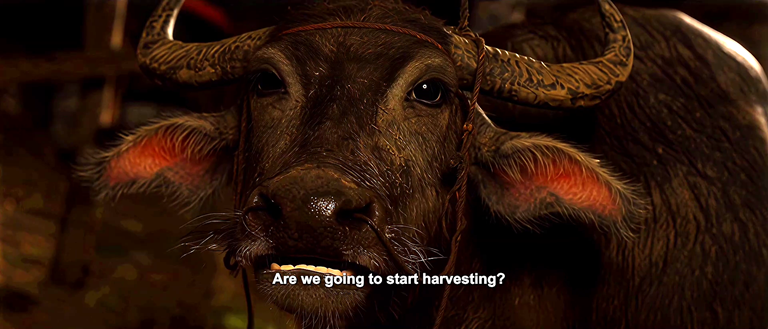
The closest Pinas cinema has come to such a parallel attempt was when action specialist Romy Suzara, toward the end of his career, tackled queer-themed substance in Tinik (2013). His triumph was not as definitive as Fajardo’s, but neither was the attempt an embarrassment for him. One could initiate an appreciation of Beast by stating that it purveys childlike wonder, but ends up far from children’s entertainment. The trailer element that might imprint on viewers would be the spectacle of a carabao that speaks adult human language, although this proceeds from the opening episode where Omeng, narrates a tale of a barrio lass whose lover took leave to work in the capital city and never returned: her farm menagerie kept imploring her to move on, but she insisted on looking forward to his reappearance in her life.
This premise is simple enough, except that history refuses to be molded into such a neat outline. While the thesis draws from European sources such as tales of the fairy-like vila and partakes of topflight feminist entertainment in Keith Deligero’s little-seen Lily (2016), real-life contemporary abandonment in the country is performed statistically by Filipinas, who comprise the majority of overseas migrant workers. Beast’s creatives are sufficiently mindful of this irony and are careful to incorporate it in their narrative resolution, although for discovery’s sake we should desist from spoiling it for potential audiences.
Bob, the incorrigibly garrulous carabao, is voiced by stage and screen veteran Lou Veloso, who demonstrates how a sufficiently gifted performer may be saddled by costumes or makeup or, in this case, absence from the screen, yet still be capable of a larger-than-life presence. This is facilitated by the dynamic he forms as comic foil to lead actor John Arcilla, who not surprisingly makes every effort to divest himself of the neurotic-strongman persona he assumed in Jerrold Tarog’s Heneral Luna (2015), but winds up rendering a characterization of such rarely realized pathos that it could be easily misrecognized as a documental depiction of typical rural reticence: the fact that Bob first chatters after Lolo Omeng is informed that he will lose what he expected was a lifetime tenancy, suggests the traumatization that our citizens have to find ways of handling on their own.
The performative groundwork laid by this theater-honed pair, complemented by the disciplined delivery of an ensemble who might be recognizable to viewers familiar with Fajardo’s multicharacter-reliant work, facilitates one of the more satisfying plot twists in recent local cinema – and we’re not even talking about narrative closure yet, when the story transcends the limitations that historical reality imposes on it. One may or may not come across the director’s own account of how, at some point in postproduction, he stopped worrying about technical finesse. Formalist evaluators may take him to task for it, but it only makes of Beast a genuine throwback to Pinas cinema’s Golden Ages productions, when entertainment (not to mention artistic confidence) was of such paramount importance that audience approval mattered more than critical or festival recognition.
In the best Third-cinema tradition, Beast relies on the acceptance of mass viewers out to seek some respite from a harried and cruel existence, and sneaks in political insight of such longstanding usefulness that audiences could wind up wondering just what hit them and return for surer answers and recurrent pleasures.
Joel David is a retired Professor of Cultural Studies at Inha University and was given the Art Nurturing Prize at the 2016 FACINE International Film Festival in San Francisco. He has written several books on Philippine cinema; his latest, titled Canon Decampment, is available for free on his blog at Amauteurish.com.